
Jan 14, 2025

Quote Of The Day |
"Success is not the key to happiness. Happiness is the key to success. If you love what you are doing, you will be successful."
Albert Schweitzer |
10 Things to Nail Down When Creating Your Customer Avatar (Without Boring Yourself to Death) |
Defining your customer avatar isn’t just a fancy marketing exercise—it’s the difference between selling out of your best dish by 2 PM or sadly nibbling on unsold stock at the end of the day. Here are ten key things to consider when crafting your ideal customer:
For this example we have used the “The Hungry Cantab” a imaginary food truck start up in Cambridge (in the next issue we will show you how we apply all this information) In the mean time please try and think how this wEould be applied to your business.
REMEMBER CLEARLY DEFINING YOUR CLIENT AVATAR WILL PUT YOU HEADS ABOVE YOUR COMPETITION
1. Demographics – The Basics
Who are they? Age, gender, income, job title—this is the bread and butter (or should we say bacon bap?) of understanding your audience.
2. Location – Where Do They Roam?
Are they local workers grabbing a quick bite, students looking for cheap eats, or tourists wandering past your food truck, drawn in by the smell of something sizzling?
3. Personality – The Quirks Matter
Are they adventurous foodies, picky eaters, or the type who insists on taking a photo of their meal before touching it?
4. Pain Points – What Keeps Them Up at Night?
Are they fed up with overpriced, bland food? Do they need a fast, delicious meal between meetings or lectures? Figure out what problem you’re solving.
5. Buying Triggers – What Makes Them Say ‘Yes’
Is it a special offer? A limited-time menu item? The fact that your food truck is the only one open when hunger strikes?
6. Built-in Biases – What Do They Already Believe?
Do they assume street food is cheap and cheerful? Or that local, organic, and ethically sourced is always the way to go? Play into—or challenge—those biases.
7. Daily Routine – Where Do You Fit In?
Are they grabbing breakfast on the way to work? Looking for a late-night snack after a pub crawl? If you understand their schedule, you can serve them when they need you most.
8. Language – How Do They Speak?
Are they chatty and casual, or do they appreciate a more refined, foodie-focused approach? Your branding, menu descriptions, and even how you banter with customers should match their vibe.
9. Emotional Drivers – What Really Moves Them?
People buy with emotions. Maybe they want comfort food that reminds them of home, or a ‘treat yourself’ moment that feels indulgent without breaking the bank.
10. Competitor Habits – What Else Are They Eating?
If they’re already loyal to another food truck, why? What’s missing in the local food scene that you could provide? |
UK HAULAGE BOSSES: Are You Bleeding Cash? Ask Your Accountant These 7 Questions NOW! |
Asking these questions will help you stay compliant, maximize savings, and plan effectively for the future. |
"Fascinating Facts You Never Knew You Needed!" |
|
This Weeks Member Success Story |

As a plumber, Joe was happier with a spanner in hand than staring at a screen full of faces, but his mate Steve had convinced him to give this NetworkB2B meet-up a go. “Go on, Joe,” Steve had said. “You might pick up a job or two – it’s better than sitting around waiting for the phone to ring!”
So there he was, on a damp Friday morning, awkwardly logging in to the virtual meeting, trying to figure out where the mute button was. Joe wasn’t sure what he was doing there.
Then he noticed a familiar face pop up on screen – Tom, a lad he’d worked with a few years back on a leaky pipe job.
Tom had moved up in the world and now managed properties around Nottingham. Joe couldn’t help but laugh seeing him there, looking all professional.
“Alright, Joe!” Tom messaged him in the chat. “Didn’t think plumbing types went in for this online networking stuff!”
“Desperate times, mate,” Joe replied. “What are you doing here?
Thought you’d have a fleet of plumbers by now.”
Tom chuckled and shot back, “Actually, we’ve got a big new property project starting, and we’re in desperate need of a decent plumber.
The last lot were, well… let’s just say they weren’t the sharpest tools in the box!”
Joe’s ears perked up. “You’re serious?” he typed back.
“Absolutely,” replied Tom. “I’ll introduce you to the boss – he’ll appreciate someone who knows a stopcock from a spanner!”
A few quick exchanges later, Tom had lined up an introduction with his manager. By the end of the week, Joe was on another virtual call, this time with Tom’s boss. They hit it off immediately, and just like that, Joe landed the plumbing contract for Bright Property Group’s latest development.
When he rang Steve to share the good news, he was all smiles. “Looks like you were right about these online meetings after all, Steve.
Turns out it’s not all posh blokes talking shop – sometimes, there’s a bit of work in it for us spanner-wielding types too!” |
Drop'in To One Of These Groups Next Week 10/06/2026 |
Jesmond - Wednesday 7.30-9.30 Cambridge - Tuesday 7.30 -9.30 Peterborough - Thursday 9.15-10.30 Bedford - Wednesday 9.30 - 10.30
Please Book Your Slot To One Of Our Events With One Of The Team. |
4 Simple Tweaks to Make Your 60-Second Intro Inforgettable |
1. Start with a Bold Impact Line - Open with a sentence that highlights what sets your photography apart. Try, “I capture the moments most people never see.”
2. Share a 10-Second Story - Use a quick story to show your unique approach. “Last week, I shot a wedding where the bride didn’t even know her father was tearing up until she saw my photo.”
3. Address a Common Pain - Identify a pain point your audience feels. “Ever feel like your photos don’t capture the real *you*? That’s where I come in.”
4. End with Curiosity - Close with a teaser. “Ask me how I turn everyday moments into magazine-quality images.”
These 4 tweaks will make your intro unforgettable and your work stand out instantly as you probably worked out this example was for one of our photography members. |
 |
This Weeks Member Spotlight |
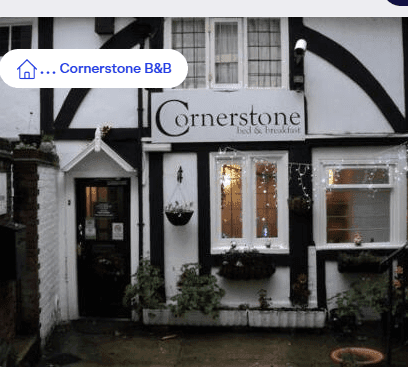
Member Spotlight: NEC Birmingham’s Go-To B&B for Business Travelers
Meet *The Cornerstone Inn*, a cosy yet professional bed and breakfast located just minutes away from the NEC Birmingham. Known for its warm hospitality and tailored business services,
The Cornerstone Inn has become a favourite for small business owners and entrepreneurs looking for a convenient, comfortable, and cost-effective stay while attending events, trade fairs, and exhibitions at the NEC.
What Sets Them Apart?
From high-speed Wi-Fi to private workspaces and 24/7 access to coffee and tea, this B&B goes the extra mile to keep guests connected and productive.
Weekday Business Specials
Early Check-in & Late Check-out - Flexible options to match trade fair schedules
Meeting Room Access - A quiet, professional space to hold small meetings or make calls before heading to the NEC
Why Choose The Cornerstone Inn?
The Cornerstone Inn is a top choice. Their weekday packages save time, add convenience, and provide a supportive space where business owners can focus on networking, deal-making, and event prep without any added stress.
Whether you're attending a trade show, conference, or just planning meetings, *The Cornerstone Inn* is here to make sure you’re well-rested, connected, and ready to succeed! |
Buy or Rent? The Great Peterborough Business Dilemma |
A No-Nonsense Guide to Choosing Between Freehold and Leasing for Your Startup |
Starting a business in Peterborough, in Cambridgeshire, is an exciting journey filled with big decisions. Over 200 new business's were launched in Peterborough in in Q4 in 2024. One of the first (and scariest) choices for setting up a new business? Deciding whether to buy a commercial property (freehold) or lease one. It’s a bit like choosing between a mortgage and renting a flat—except with more paperwork and fewer dodgy landlords texting, "Rent’s due, mate." So, what’s best for your business? Let’s break it down. The Case for Buying (Freehold): You’re the Boss, But at a CostBuying a property is the grown-up, responsible thing to do. You build equity, have complete control, and don’t have to deal with a landlord who suddenly decides they need your space for a yoga studio. Pros of Buying a Freehold Property✅ Long-Term Investment – Peterborough’s property values have been holding strong. Owning means you can watch your investment grow while avoiding those dreaded rent hikes. Cons of Buying a Freehold Property❌ It’s Expensive – You’ll need a hefty deposit (20-30% of the property value), plus legal fees, stamp duty, and renovations. How Do You Pay for It?
The Case for Leasing: Freedom, Flexibility, and Fewer HeadachesLeasing is like dating—you can test the waters before committing. If things go south, you pack up and move. No messy breakups with estate agents involved. Pros of Leasing a Commercial Property✅ Lower Upfront Costs – No massive deposit needed, just rent and a security deposit. Cons of Leasing a Commercial Property❌ No Equity – You’re building your landlord’s investment, not your own. Typical Lease Terms in Peterborough
So, What’s the Best Choice for a Startup?For most startups, leasing is the smarter move. It keeps upfront costs low, allows for flexibility, and lets you test the market before going all-in on property ownership. However, if you have serious financial backing, a stable, long-term plan, and don’t mind dealing with maintenance, buying a freehold can be a fantastic investment. |
Cambridgeshire Business in 2025: What’s Changing & How to Stay Ahead2025 is shaping up to be a year of big shifts for small and medium-sized businesses (SMBs) in Cambridgeshire. High-tech industries are booming, inflation remains a challenge, and tax changes are putting pressure on some sectors. So, what does this mean for local businesses? Here’s the lowdown—fast, clear, and to the point. Who’s Thriving?🔹 High-Tech & Knowledge-Intensive (KI) Sectors: If you’re in life sciences, high-tech manufacturing, or ICT, things are looking up! These industries saw 6.1% job growth in 2023, with high-tech manufacturing alone jumping 7.5%. There’s still room to ride the wave—especially if your business supports innovation, R&D, or digital solutions. 🔹 Traditional Sectors Holding Steady: Non-tech businesses saw modest but stable growth (3.8% job increase). Consumer-driven industries remain strong, but economic shifts could impact demand—staying adaptable is key. 🔹 Farms Under Pressure: Inheritance tax changes are squeezing family-run farms, making diversification a survival strategy. Exploring agritech, direct-to-consumer sales, or alternative revenue streams might be the way forward. Cambridgeshire’s Economic Pulse💡 The local economy is stronger than the UK average, with GVA up 160% since 1998. What’s Next? 2025 Predictions📈 Economic Growth: The UK economy is expected to grow 1.3%, and Cambridgeshire should follow suit—fueled by government spending and thriving KI industries. 💰 Investment is Picking Up: Business investment is forecast to rise 1.3%, but investors are looking for innovation and sustainability—if your business embraces these, you’ll be ahead of the pack. ⚠️ Inflation Sticking Around: Costs aren’t dropping anytime soon. Inflation is likely to stay above the Bank of England’s target until 2026, so expect higher expenses in operations and supply chains. How to Stay Ahead
✔ Tap into KI Growth – If your business can support high-tech, R&D, or digital transformation, now is the time to pivot or expand. Cambridgeshire’s business landscape is shifting, but smart businesses will adapt and thrive. The key? Stay informed, stay agile, and take action. 🚀 |
Community Initiatives & Updates |
Inform members about the Network B2B Community, including upcoming online events, training sessions, and exclusive member offers. Encourage participation to enhance the collective experience |
Industry Insights and Trends |
Share relevant industry news, market trends, and insights that could benefit members across various sectors. This keeps the community informed and positions Network B2B as a valuable resource for business intelligence. |
Exclusive Member Offers |
Highlight special promotions or discounts available to members, such as free one-page websites (excluding hosting fees) or discounts on IT software. This adds value to membership and encourages engageme |
Trivia Question❓In the latest Cambridgeshire Business Pulse report, which industry was ranked as the most optimistic in terms of future growth and investment opportunities? Answer at the bottom of the newsletter |
💡 Answer to Trivia Question: The technology sector. |