
The Restaurant Is Packed.The Owner's Still Skint. |
Every table's taken, the kitchen's flat out and the tills are ringing. So why isn't the owner celebrating? |
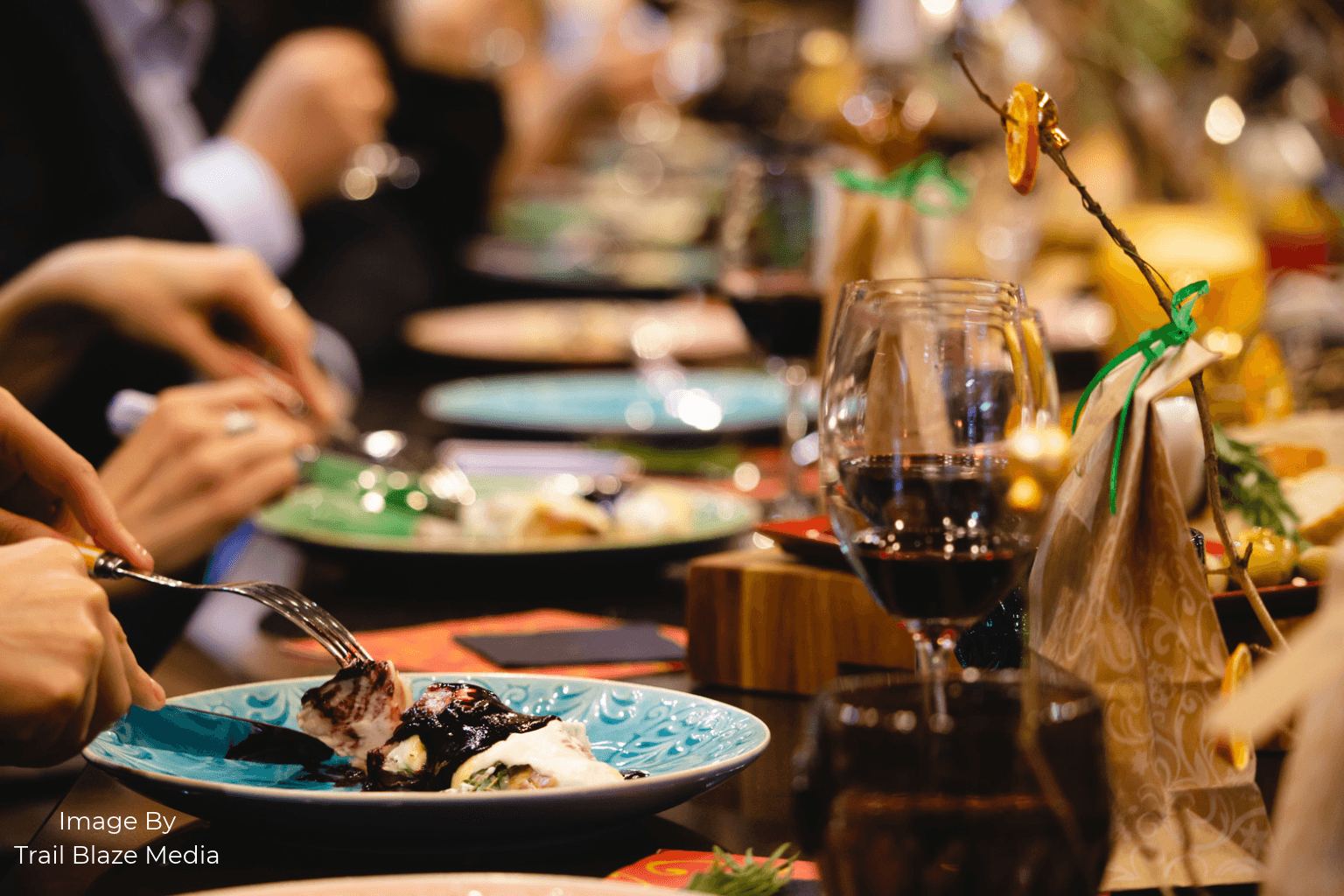
It's Saturday night. Every table is occupied, the kitchen printer is producing orders faster than anyone wants to count them, and somebody at the door is asking whether there's any chance of squeezing in two more.
From the pavement, it looks like a licence to print money.
From behind the till, the sums can be rather less romantic.
Because a full restaurant and a profitable restaurant aren't necessarily the same thing.
And the customer enjoying a £20 main course isn't seeing quite the same £20 as the person who has to pay everyone involved in producing it.
The £20 that doesn't belong to the owner
Imagine ordering a £20 main course at an independent restaurant.
You see the food, the plate and hopefully something that makes you glad you didn't stay home with a supermarket pizza.
The owner sees something else.
Ingredients. Kitchen staff. Waiting staff. Electricity. Rent. Business rates. Card-processing fees. Cleaning. Insurance. Equipment. Waste.
And the inevitable evening when the dishwasher decides it's had enough of the hospitality industry.
Not every cost belongs directly to that particular plate, of course.
But every plate has to help pay for the business that makes it possible.
The question isn't simply how much money comes through the till. It's how much remains once the cost of delivering the experience has been accounted for.
Two restaurants. Same queue. Very different fortunes.
Picture two fictional restaurants, both fully booked on Saturday night.
Restaurant A knows which dishes sell well, which ones make a healthy contribution towards overheads and how much food it can realistically expect to use.
Staffing is planned around bookings, and prices reflect what the business needs to earn.
Restaurant B is just as popular.
But several of its bestselling dishes are priced too cheaply.
Too much food is ordered, extra staff hours creep into the rota, and the owner is reluctant to change anything because customers love the current prices.
Both restaurants look successful in photographs.
Both have customers posting pictures of their dinners.
Only one may be making enough money to justify the effort.
Popularity is wonderful. It just doesn't pay suppliers by itself. The bestselling dish could be the problem
Here's a particularly awkward thought.
The dish customers order most often might not be the one the restaurant most wants to sell.
A popular menu item can have expensive ingredients, take longer to prepare or generate more waste than expected.
Meanwhile, a less glamorous dish might make a better contribution towards keeping the restaurant open.
This doesn't mean every menu should be designed purely around profit.
Customers return because they enjoy the food, the service and the experience. Remove those and the spreadsheet may look beautiful right up until the dining room empties.
But restaurant owners need to understand the numbers behind the favourites.
A menu isn't just a collection of things people fancy eating.
It's also part of the business model.
Saturday night can't rescue every TuesdayA packed Saturday is exciting.
A nearly empty Tuesday is less photogenic. But the rent doesn't disappear because nobody booked a table on Tuesday evening.
Neither do insurance, equipment costs or many of the other expenses involved in running a restaurant.
Hospitality businesses have to manage the uncomfortable difference between busy periods and quiet ones.
Put too many staff on a slow shift and costs rise.
Put too few on a busy shift and customers may spend their evening wondering whether their dessert is being delivered from another county.
Get the balance wrong often enough and even a restaurant with a loyal following can struggle.
That's why the real measure of success isn't one spectacular evening.
It's whether the business works across the week, the month and the year.
The customer has a budget tooOf course, there's another person involved in all this arithmetic.
The diner.
They don't necessarily care about the cost of refrigeration, insurance or replacing a broken extractor fan.
They care about what arrives on the plate, how they're treated and whether the final bill feels reasonable.
And they're entitled to.
A restaurant can't simply keep increasing prices and expect customers to applaud its accounting.
The challenge is to offer something people genuinely want to return for while charging enough to make that possible.
Sometimes that means adjusting a menu. Sometimes it means reducing waste, changing opening hours or finding a better way to manage bookings and staffing.
And sometimes it means admitting that a popular offer simply isn't earning its keep.
The business behind the lovely eveningThe best independent restaurants make hospitality look effortless.
A warm welcome. Food arriving at the right moment. Someone remembering a regular customer's favourite table.
That's part of what makes eating out enjoyable.
Behind it, though, is a business juggling dozens of decisions that customers never need to see.
So the next time you pass a packed restaurant in Cambridge, Peterborough or elsewhere in Cambridgeshire, enjoy the buzz.
Just don't assume the owner is heading home to count a fortune.
They may be heading home to work out whether Saturday's takings will cover Tuesday.
The Business Pulse Question
What makes you return to an independent restaurant?
The food, the service, the atmosphere or the feeling that you've had your money's worth? Add you comments below. |
0 Comments
Join the conversation
Be the first to comment
Share your thoughts above.