Main Article Headline |
Article Sub Headline |
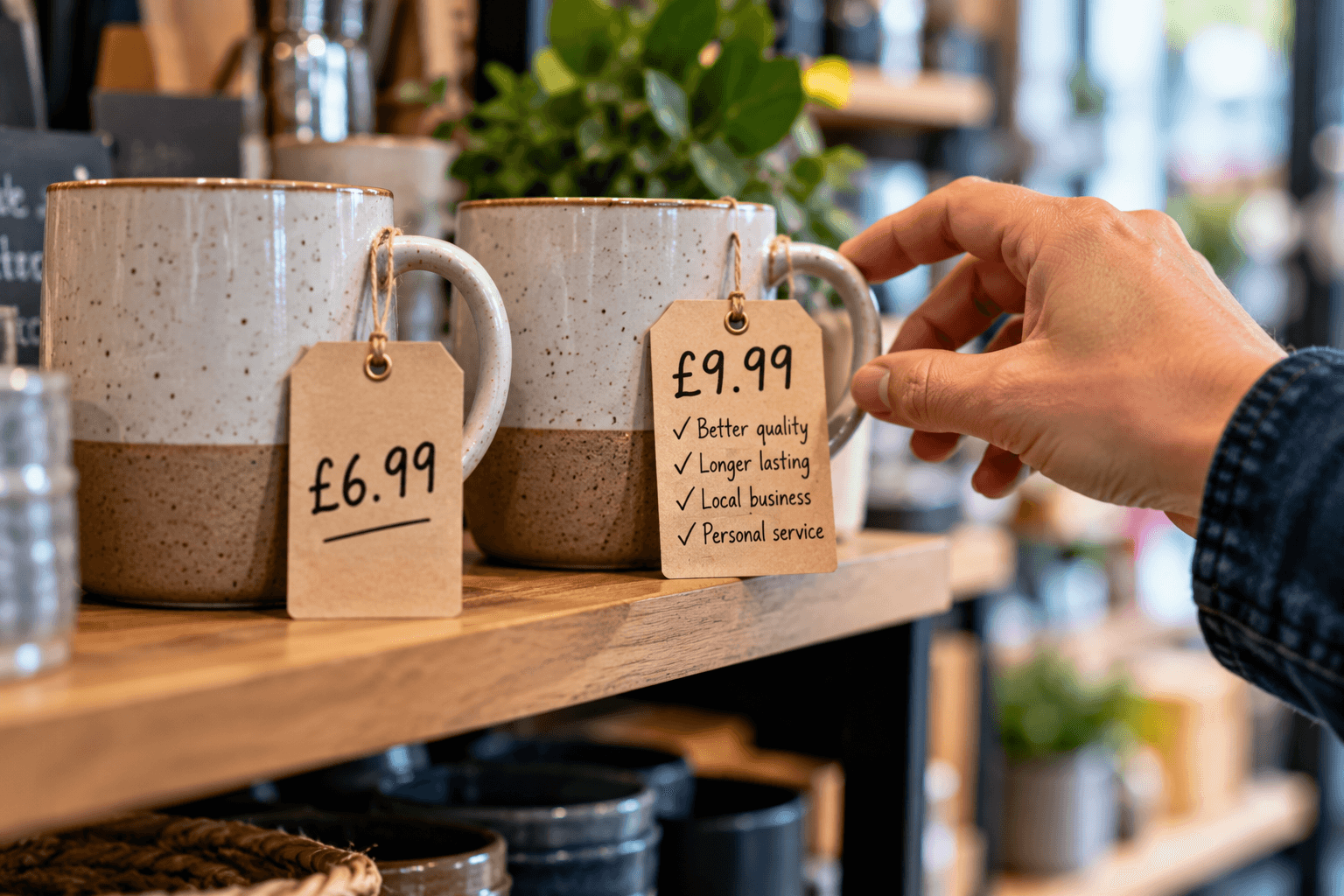
There's a peculiar moment in business when winning a customer can feel suspiciously like losing.
You've spent twenty minutes explaining your service, another half-hour preparing a quotation and a further ten minutes negotiating.
The customer finally agrees, largely because you've knocked another £50 off the price.
Brilliant. You've got the job.
Now you just have to do the work, pay your costs and somehow make a living from what's left.
Meanwhile, the customer is delighted.
They've secured a bargain, and you've secured a busy afternoon wondering whether you should have become an accountant.
Being the cheapest can be a perfectly legitimate business strategy. But being the cheapest by accident is a very different matter.
There's always somebody cheaperImagine two local businesses offering similar services.
One charges £150. The other charges £120.
The first business responds by reducing its price to £115, hoping to win more customers.
A week later, the competitor advertises a special offer at £99.
Where does it end?
For businesses built around high volumes, efficient systems and carefully managed costs, competitive pricing can work extremely well.
Supermarkets have spent decades demonstrating that customers care about price.
But an independent tradesperson, specialist retailer or small professional services firm may not have the same purchasing power, staffing flexibility or operating model.
Trying to win a price war against a business with fundamentally different economics can be exhausting.
The important question isn't simply whether customers can find somebody cheaper. They almost certainly can.
It's whether you've given them a good reason to choose you anyway.
The £20 difference nobody explained
Suppose two local tradespeople quote for the same job.
One charges £180 and the other £200.
If the customer receives nothing more than two numbers, choosing the cheaper quotation seems entirely reasonable.
But what if the £200 quotation clearly explains the work involved, the materials included, when the tradesperson can attend, what happens if something unexpected is discovered and how any follow-up will be handled?
Now the customer has something to compare beyond the headline price.
That doesn't automatically make the more expensive quotation better. The cheaper provider might deliver equally excellent work.
But it does mean the customer can make a more informed decision.
Too many businesses spend considerable effort becoming good at what they do and remarkably little effort explaining what customers actually receive.
Then they're surprised when the conversation revolves entirely around price.
Stop saying you're passionate
There's nothing wrong with caring about your work. Most business owners do.
But consider how often customers encounter phrases such as:
We're passionate about delivering exceptional service.
We pride ourselves on quality.
Your satisfaction is our priority.
Those statements may be sincere, but they don't tell customers very much.
A customer choosing an accountant might be more interested in knowing whether they'll have a named contact and how questions are handled between appointments.
Someone booking a dog trainer may want to understand the training approach, what happens during a session and what support is available afterwards.
A homeowner choosing a decorator might appreciate a clear schedule, an explanation of preparation work and knowing how the property will be left at the end of each day.
Those details make value easier to understand because they describe the experience rather than merely praising the business.
Show customers what they're paying for. Don't just tell them you're wonderful.
Perhaps the customer doesn't want the cheapest optionDifferent customers value different things.
Someone buying a basic household item may care primarily about price and convenience.
Another person purchasing a specialist service may place greater importance on experience, reliability, flexibility or reassurance.
Neither customer is wrong.
Problems arise when businesses assume everyone makes decisions in the same way.
A premium service shouldn't pretend to be a bargain-basement offer.
Equally, a straightforward budget service doesn't need to apologise for being affordable.
The opportunity is to understand who you're trying to serve and design an offer that makes sense for them.
For some businesses, that might mean offering clearly defined service levels.
A basic option could cover the essentials, while a more comprehensive package includes additional support or convenience.
The difference needs to be genuine, easy to understand and fairly priced.
Customers generally appreciate knowing what they're getting.
They appreciate discovering unexpected extras on the invoice considerably less.
The discount that ate your profit
Here's some interesting maths.
Suppose a business sells a service for £200, with £120 in direct costs.
That leaves £80 towards overheads and profit.
Now imagine offering a 20% discount.
The customer pays £160, but the direct costs remain £120.
The amount left falls from £80 to £40.
A 20% reduction in selling price has halved the contribution available to cover overheads and profit.
That doesn't mean discounts are always bad.
They can help businesses fill spare capacity, introduce customers to a service or clear stock.
But the numbers need to work.
Before offering a discount, understand what it actually costs and what you hope to achieve.
Otherwise, you may find yourself working twice as hard to generate the same contribution.
And nobody starts a business because they've always dreamed of doing twice the work for the same money.
Give customers something better than a discountIf somebody hesitates over your price, reducing it isn't the only possible response.
Perhaps they don't understand what's included.
Perhaps the service is more comprehensive than they need, or the payment timing is difficult.
A conversation may reveal a better solution.
You could clarify the quotation, offer a genuinely smaller scope of work, explain the benefits more clearly or provide alternative options where appropriate.
Sometimes the customer will still choose somebody cheaper.
That's business.
Not every enquiry has to become a sale, and not every customer is the right match for every provider.
A business that wins fewer jobs at sustainable prices may be healthier than one that wins everything and struggles to cover its costs.
The challenge is knowing the difference.
A useful experiment for your next quotationBefore sending your next quotation or publishing your next price list, look at it from the customer's perspective.
Could somebody unfamiliar with your business understand what they're buying?
Are the important inclusions, limitations and next steps clear?
Have you explained any differences between your offer and a simpler alternative?
Then ask yourself a harder question.
If a competitor offered the same thing for 10% less, what would make a customer choose you?
If you have a convincing answer, make sure customers can see it.
If you don't, perhaps that's where your next improvement should begin.
Because the goal isn't to become the most expensive business in Cambridgeshire.
Nor is it to charge more simply because somebody on LinkedIn told you to know your worth.
It's to build a business that offers genuine value, explains that value clearly and earns enough to keep delivering it.
And if that means occasionally losing a customer who only wants the lowest possible price?
You might just have saved yourself a very busy, very unprofitable Tuesday.
The Business Pulse Question
When choosing a local business, what would persuade you to pay more than the cheapest quotation?
Is it reputation, personal service, experience, convenience or something else?
Tell us in the comments. We'd particularly like to hear examples of local businesses that have earned your trust without competing on price alone. |
0 Comments
Join the conversation
Be the first to comment
Share your thoughts above.